








Erasmus+ Learning
Mobility Projects (KA1)
Mobility Projects (KA1)

The Erasmus+ programme offers opportunities for international cooperation and mobility in school education, vocational education and training, higher education and adult education.
Erasmus+ Programme Priorities
- Inclusion and Diversity
Across all its activities, the programme ensures equal opportunities and access, inclusion, diversity and fairness. When designing their projects and activities, organisations are expected to take an inclusive approach, making them accessible to a wide range of participants, including people with fewer opportunities.
- Digital Transformation
The programme supports the development of a digital ecosystem, encouraging the use of digital technologies in teaching and learning across all education sectors. It supports both the building of digital competences among a wide range of people and the mastery of more advanced uses of digital technology.
- Environment and Fight Against Climate Change
The Erasmus+ programme supports the development of knowledge, skills and attitudes relating to climate change and sustainable development. It funds projects aimed at changing behaviour at the level of individuals and cultural values — projects that raise awareness of sustainable development and shift patterns of consumption and ways of living.
- Participation in Democratic Life
The programme supports people's involvement in democratic processes and increases knowledge about the European Union. Priority is given to projects that give people the chance to take part in democratic life and that encourage social and civic engagement through formal and non-formal learning activities.
In Latvia, Erasmus+ is administered by:
the State Education Development Agency (formal education strand), and
the Agency for International Programmes for Youth (youth strand).
The Ministry of Education and Science is the ministry responsible for implementing Erasmus+ in Latvia.
More about the Erasmus+ programme at www.erasmusplus.lv
2026-1-LV01-KA121-VET-000433608
European Union Erasmus+ programme, Key Action 1 (KA1) "Learning Mobility of Individuals", vocational education and training sector, KA121 mobility project 2026-1-LV01-KA121-VET-000433608, implemented by Vocational Secondary School "Victoria", SIA "Biznesa, mākslas un tehnoloģiju augstskola RISEBA"
2025-1-LV01-KA121-VET-000336321
European Union Erasmus+ programme, Key Action 1 (KA1) "Learning Mobility of Individuals", vocational education and training sector, KA121 mobility project 2025-1-LV01-KA121-VET-000336321, implemented by Vocational Secondary School "Victoria", SIA "Biznesa, mākslas un tehnoloģiju augstskola RISEBA"
Project aim: To provide students and staff with opportunities for traineeships and work-based learning abroad, raising their professional skills and competences.
Main activities: Student mobility to vocational education institutions and companies abroad; staff mobility and professional development for teaching staff.
Number of participants: 35 students, 6 teachers
Partners:
- VITALIS Betreuungsgesellschaft für Modellprojekte mbH, Germany
- APLICAPROPOSTA LDA, Braga mob, Portugal
- EU Mobility Sverige, Sweden
- EPD – European Projects Development Unip. Lda, Portugal
- CENTRO STUDI CULTURA SVILUPPO ASSOCIAZIONE, Italy
Total funding awarded: EUR 219,360.00
2024-1-LV01-KA121-VET-000226249
European Union Erasmus+ programme, Key Action 1 (KA1) "Learning Mobility of Individuals", vocational education and training sector, KA121 mobility project No. 2024-1-LV01-KA121-VET-000226249, implemented by Vocational Secondary School "Victoria", SIA "Biznesa, mākslas un tehnoloģiju augstskola RISEBA"
Project aim: To provide students with opportunities for traineeships and work-based learning abroad, developing their professional competences and foreign language skills and increasing their motivation to learn; and to give school staff the opportunity to raise their own professional skills and competences.
Main activities: Student mobility to vocational education institutions and companies abroad; mobility for teaching staff.
Number of participants: 39 students, 4 teachers
Partners:
- Associazione Artistica Culturale “A Rocca”, Italy
- VITALIS Betreuungsgesellschaft für Modellprojekte mbH, Germany
- APLICAPROPOSTA LDA, Braga mob, Portugal
- EPD – European Projects Development Unip. Lda, Portugal
- EU Mobility Sverige, Sweden
Total funding awarded: EUR 212,429.00
2023-1-LV01-KA121-VET-000139672
Erasmus+ Key Action 1 mobility project in the vocational education and training sector, No. 2023-1-LV01-KA121-VET-000139672, implemented by Vocational Secondary School "Victoria", SIA "Biznesa, mākslas un tehnoloģiju augstskola RISEBA"
Project aim: To provide students with opportunities for traineeships and work-based learning abroad, developing their professional competences and foreign language skills and increasing their motivation to learn; to give school staff the opportunity to raise their professional skills and competences; and to invite experts from abroad to teach specific subject areas.
Main activities: Student mobility to vocational education institutions and companies abroad; mobility for teaching staff (job shadowing); invited experts.
Number of participants: 31 students on short-term mobility, 5 students on long-term mobility, 3 teachers on job shadowing, 1 invited expert
Partners:
- Associazione Artistica Culturale “A Rocca”, Italy
- APLICAPROPOSTA LDA, Braga mob, Portugal
- EPD – European Projects Development Unip. Lda, Portugal
- EU Mobility Sverige, Sweden
Total funding awarded: EUR 199,813.00
How to Apply
This section provides information on the application process and the criteria for Erasmus+ mobility. Information about the next Erasmus+ application dates will be confirmed and sent to students via Mykoob.
Basic criteria for taking part in Erasmus+
- Good academic results
- Attendance — absences must not exceed the limit set by Cabinet of Ministers regulations
- No outstanding obligations, either academic or financial
- Good English language skills
- Knowledge of the host country's language may be considered an advantage
How to apply, step by step:
1. Preparation
Read the Erasmus+ selection rules.;
Write a convincing motivation letter;
Prepare a well-structured CV in Europass format, and a portfolio (for design students).
2. Submitting Your Documents
Complete the application form by the deadline set out in the selection rules.
Send your CV and motivation letter to projekti@skolavictoria.lv
*design students should also send a portfolio
**all documents must be prepared in English
3. Interview
Prepare for an interview in English.
You will receive an invitation to an interview during the interview period for that particular mobility.
4. Results
Depending on the number of applicants, but no later than within 10 working days, you will receive the results — whether you have been selected, placed on the reserve list, or not selected for the Erasmus+ mobility.
News


Frequently Asked Questions
Will I have to pay for anything?
Costs related to the mobility are covered by European Union Erasmus+ programme funding. This usually includes travel expenses up to a set limit, accommodation, programme activities and the necessary insurance. Any other costs connected with the mobility are covered by the participant from the grant they receive. In some cases participants may have small personal expenses — souvenirs, personal purchases or optional activities outside the programme, for example.
Where will I be staying during the mobility?
Accommodation is arranged by the intermediary organisation. It is usually a hotel, student residence, host family, apartment or another facility suitable for group accommodation. Participants most often stay together with other project participants from different countries, usually sharing a room with two to four people.
Do I need to bring my own laptop or camera?
Yes. Participants in this project need to bring their own technical equipment for the practical and creative tasks they will carry out during the mobility. This applies to students of the following programmes: KDA, GDA, AKDA, TV, ID and PX.
What clothing do I need?
Since participants take up work placements in companies during the mobility, we recommend bringing business-appropriate clothing suitable for a working environment. Your clothes should be neat, comfortable and appropriate for a professional setting.
Some fields may also require specific work equipment. For example, students on the Logistics and Business and Commerce programmes may need safety shoes if their placement takes place in a warehouse or another working environment with heightened safety requirements.
More detailed information about the clothing and any work equipment needed is usually sent to participants before the mobility.
How do I get from the airport to the destination?
Before the mobility, the school will provide detailed information on how to reach the project venue. Group transport is often arranged, or you will be given precise instructions for using public transport. In some cases, representatives of the host organisation meet participants at the airport.
During the first week of the mobility, an accompanying member of staff from the school travels with the participants. They help with arrival at the destination and getting to the accommodation, and provide support with practical matters at the start of the mobility.
Who can I turn to if a problem comes up?
Participants have support from several people during the mobility. If you have questions or run into problems, you can turn to the project coordinator, who helps with practical matters both before and during the mobility.
During the first week of the mobility, an accompanying member of staff from the school is also there to help participants settle in, get to know their surroundings and deal with any questions that come up at the start.
Support on the ground is also provided by a representative of the intermediary organisation, who coordinates the mobility in that particular country. At the placement itself, every participant has a mentor they can approach with questions about their tasks and day-to-day work at the company.
Can I choose which country I go to?
Participants usually apply for a specific project that has already been planned in a particular country. The school offers several mobility options and you can apply for the one that interests you most, though we cannot guarantee that everyone's first choice can be accommodated.
In some cases it is also possible to arrange an individual placement, if you already know of a host organisation or company willing to take you on. In that situation, the coordinator will assess the opportunity together with you to make sure it meets the aims of the project and the conditions of the Erasmus+ programme.
Can I apply again if I have already taken part in an Erasmus+ mobility?
Yes, in most cases you can. Having taken part in an earlier Erasmus+ mobility does not rule out applying again. In the selection process, however, priority is given to young people who have not yet taken part in a mobility.
What are the selection criteria for participants?
The selection criteria can vary from project to project. We usually look at your motivation, your interest in the field of the placement, your readiness to take part in a mobility and your language skills.
All selection criteria and conditions are set out in detail in the participant selection rules — here.
What documents do I need?
To take part in a mobility, you need a valid identity document (passport or ID card). Before the mobility you will sign a grant agreement and a Learning Agreement, which set out the conditions of the mobility, the funding and the intended learning outcomes.
If the participant is under 18, the grant agreement and the Learning Agreement are also signed by a parent or legal guardian.
Participants also need a European Health Insurance Card (EHIC), which gives access to emergency medical care in other European countries. Additional insurance is arranged by the school.
Can I withdraw from the mobility?
Yes, you can withdraw from a mobility. Once the selection results have been announced, you have two weeks to decide whether to take part in the project.
If you withdraw after that deadline, once preparations for the mobility have already begun — travel tickets bought or other bookings made, for example — you may be required to cover the costs already incurred.
If you break off your participation during the mobility without a valid reason, you may be asked to repay the costs connected with the mobility, in line with the conditions of the project and of the agreement.
Do I need to have my own bank account?
Yes, you need your own bank account, because part of the mobility funding — the grant — is awarded to you personally and is transferred to your account in accordance with the grant agreement.
Personal Data Processing in Erasmus+ Projects
Personal Data Processing in Erasmus+ Projects
The controller for the processing of personal data in the European Commission's Erasmus+ project management systems is the European Commission. Contact details of the European Commission's Data Protection Officer (DPO): data-protection-officer@ec.europa.eu.
The controller for the processing of personal data in the European Commission's Erasmus+ project management systems is the European Commission. Contact details of the European Commission's Data Protection Officer (DPO):
The processor of personal data is the implementing organisation of the Erasmus+ project — Vocational Secondary School "Victoria" — which processes personal data in the course of implementing the project in order to plan, organise, implement, administer, monitor and report on Erasmus+ projects and mobilities.
Personal data are processed only to the extent necessary for the implementation of the Erasmus+ project and the fulfilment of the related obligations.
Purposes of processing
Personal data are processed in order to:
- organise Erasmus+ projects and mobilities;
- handle participant applications and selection;
- enable participation in mobilities and other project activities;
- prepare and administer project-related documents;
- arrange travel, accommodation and insurance;
- make project-related grant payments, reimbursements and other payments;
- enter and manage information in the Erasmus+ project management systems;
- maintain financial and substantive records and prepare project reports;
- enable monitoring, checks and audits of the project;
- evaluate project results and ensure their dissemination.
Categories of personal data processed
Depending on the project and activity concerned, the following personal data may be processed:
- name and surname;
- date of birth;
- gender;
- nationality;
- contact details;
- information about the educational institution and study programme;
- information about participation in the Erasmus+ project and mobility;
- information about the mobility period, destination and host organisation;
- data required to arrange travel and insurance;
- bank account details, where these are needed to make payments under the project;
- information about special needs or fewer opportunities, where this is needed to enable participation or to justify additional funding;
- information required for project reporting, monitoring and audit;
- photographs and video recordings for the purposes of documenting and publicising the project.
Recipients of personal data
Personal data may be transferred or made accessible only to the extent necessary for the implementation of the project.
Depending on the project concerned, personal data may be accessible to:
- the European Commission;
- the State Education Development Agency (VIAA);
- Erasmus+ partner organisations and host organisations;
- providers of travel, accommodation, insurance and other services related to the implementation of the project;
- auditors and those carrying out checks;
- the competent authorities of the Republic of Latvia or the European Union, where this is required by law or by the conditions of the project.
Storage of personal data
Personal data are stored for as long as is necessary for the implementation of the project concerned and the fulfilment of the related obligations, and in accordance with applicable legislation, the requirements of the Erasmus+ programme, the project grant agreement, and financial control and audit requirements.
Security of personal data
Vocational Secondary School "Victoria" takes appropriate technical and organisational measures to protect personal data against unauthorised access, loss, disclosure, destruction, alteration or other unauthorised processing.
Access to personal data is granted only to those persons who require such access in order to carry out the project or their work duties.
Rights of the data subject
In accordance with the procedures laid down by law, you have the right to:
- receive information about the processing of your personal data;
- request access to your personal data;
- request the rectification of inaccurate personal data;
- request the erasure of personal data in certain cases;
- request the restriction of processing in certain cases;
- object to the processing of personal data in certain cases;
- withdraw your consent, where processing is based on consent.
These rights may be restricted where the processing or storage of personal data is required by law, by the requirements of the Erasmus+ programme, by the project grant agreement, or by financial control and audit requirements.
Processing of personal data in European Commission systems
Within Erasmus+ projects, the European Commission processes personal data in accordance with Regulation (EU) 2018/1725 of the European Parliament and of the Council. The European Commission's official Erasmus+ privacy statement sets out the purposes of processing, the categories of data processed, the recipients of the data, the retention periods and the rights of data subjects.
European Commission Data Protection Officer (DPO):
data-protection-officer@ec.europa.eu
data-protection-officer@ec.europa.eu
Contact details of the European Commission's Erasmus+ data controller:
EU-ERASMUS-ESC-PERSONAL-DATA@ec.europa.eu
EU-ERASMUS-ESC-PERSONAL-DATA@ec.europa.eu
Further information:
Project Archive
2022-1-LV01-KA121-VET-000068158
Erasmus+ Key Action 1 mobility project in the vocational education and training sector, No. 2022-1-LV01-KA121-VET-000068158, implemented by Vocational Secondary School "Victoria", SIA "Biznesa, mākslas un tehnoloģiju augstskola RISEBA"
Project aim: To provide students with opportunities for traineeships and work-based learning abroad, developing their professional competences and foreign language skills and increasing their motivation to learn; and to give school staff the opportunity to raise their own professional skills and competences.
Main activities: Student mobility to vocational education institutions and companies abroad; mobility for teaching staff.
Number of participants: 39 students, 4 teachers
Partners:
Associazione Artistica Culturale “A Rocca”, Italy
VITALIS Betreuungsgesellschaft für Modellprojekte mbH, Germany
TRIBEKA TRAINING LAB S.L.U., Spānija
EPD – European Projects Development Unip. Lda, Portugal
EU Mobility Sverige, Sweden
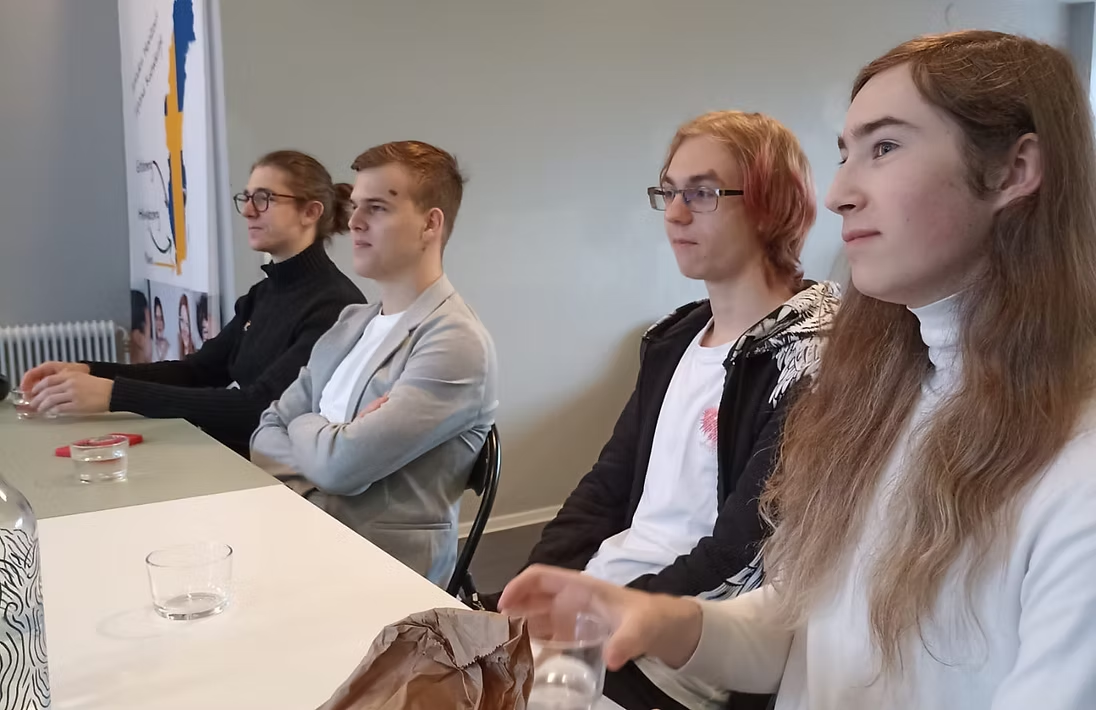
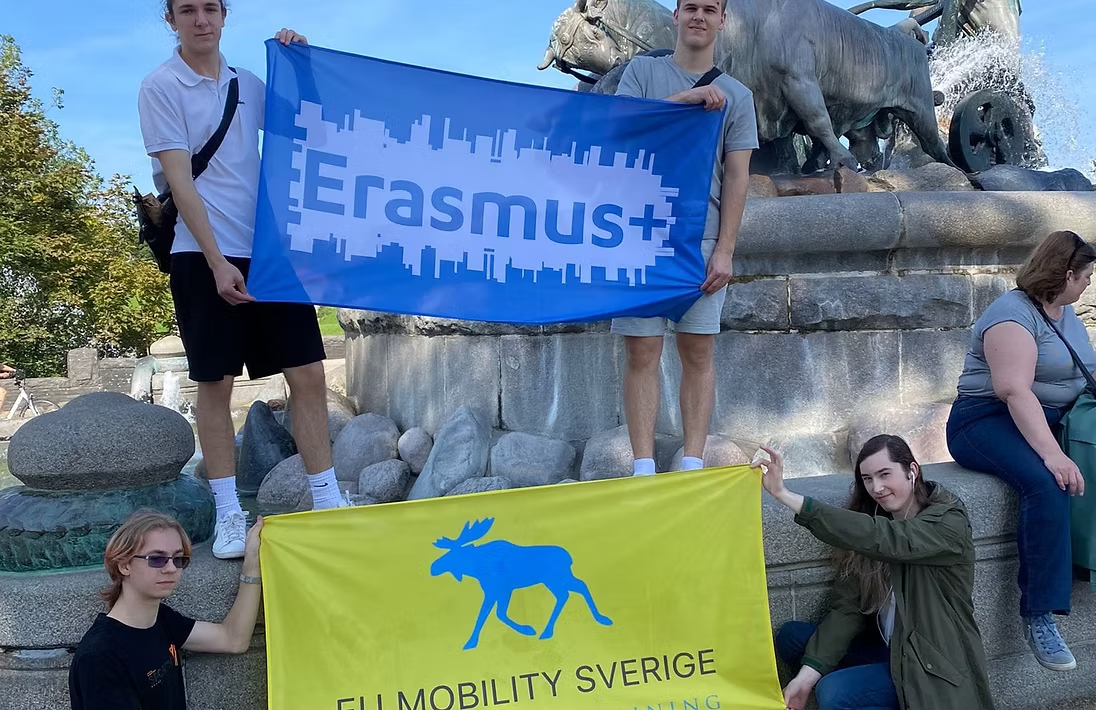
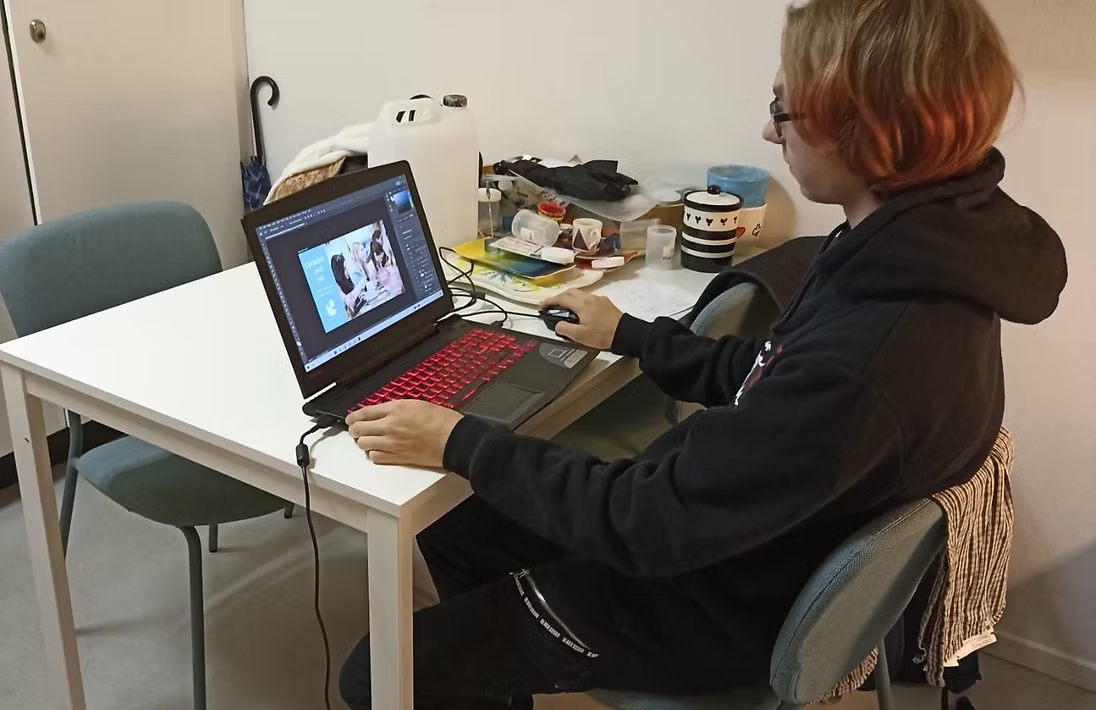
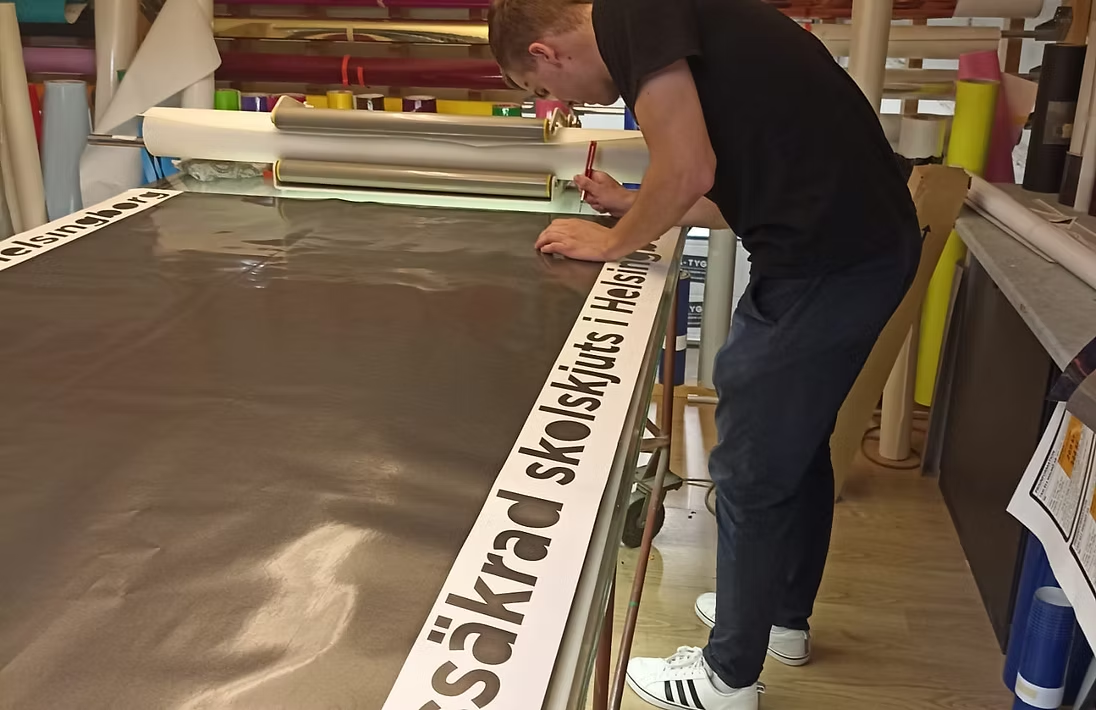

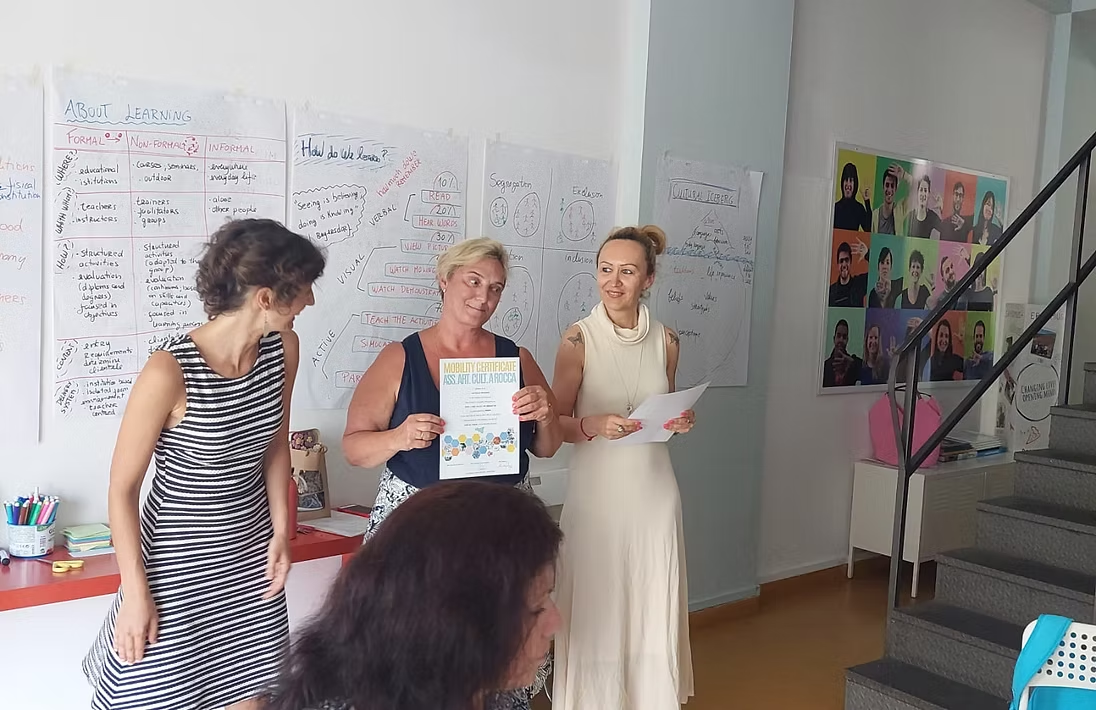
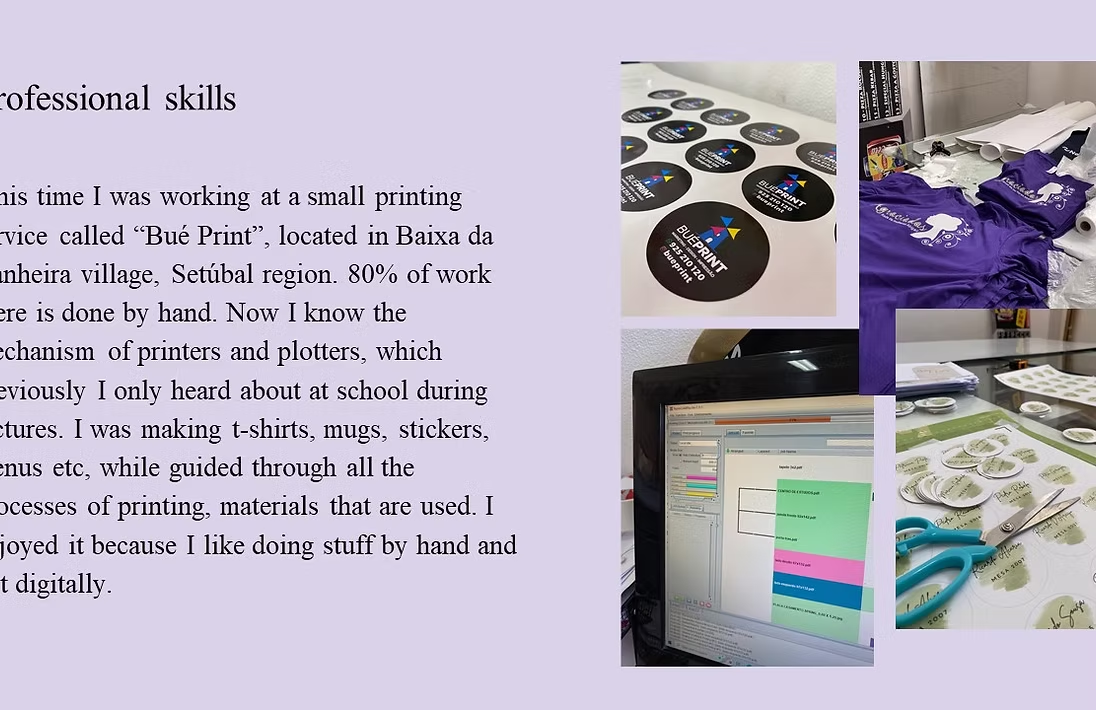
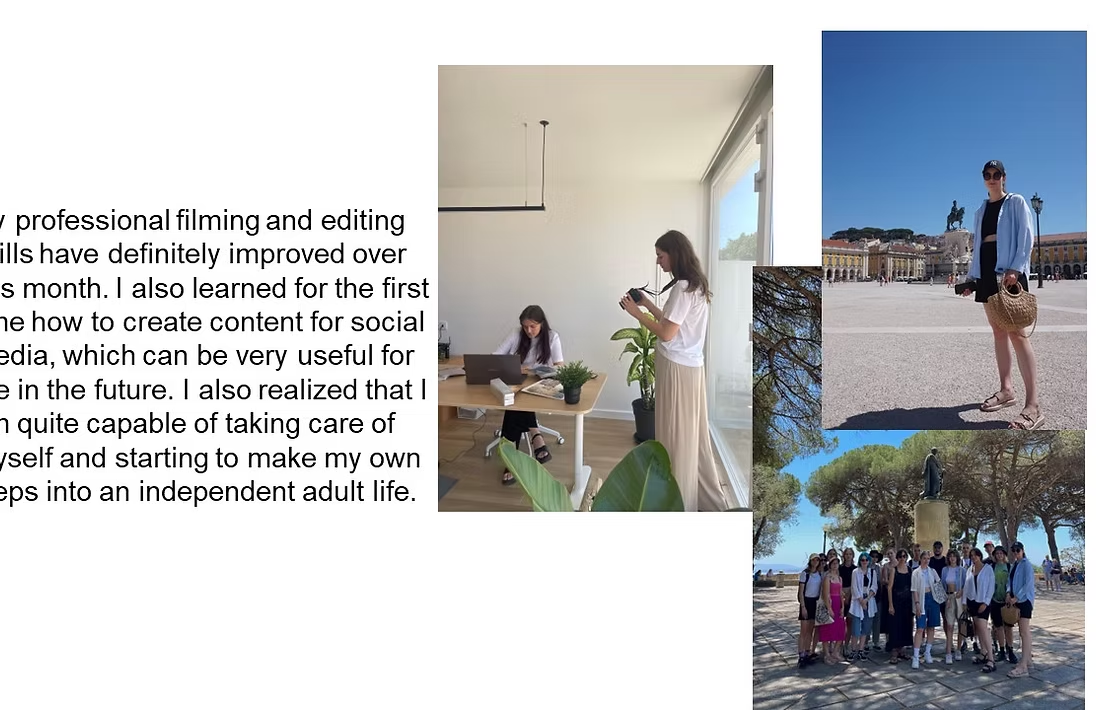


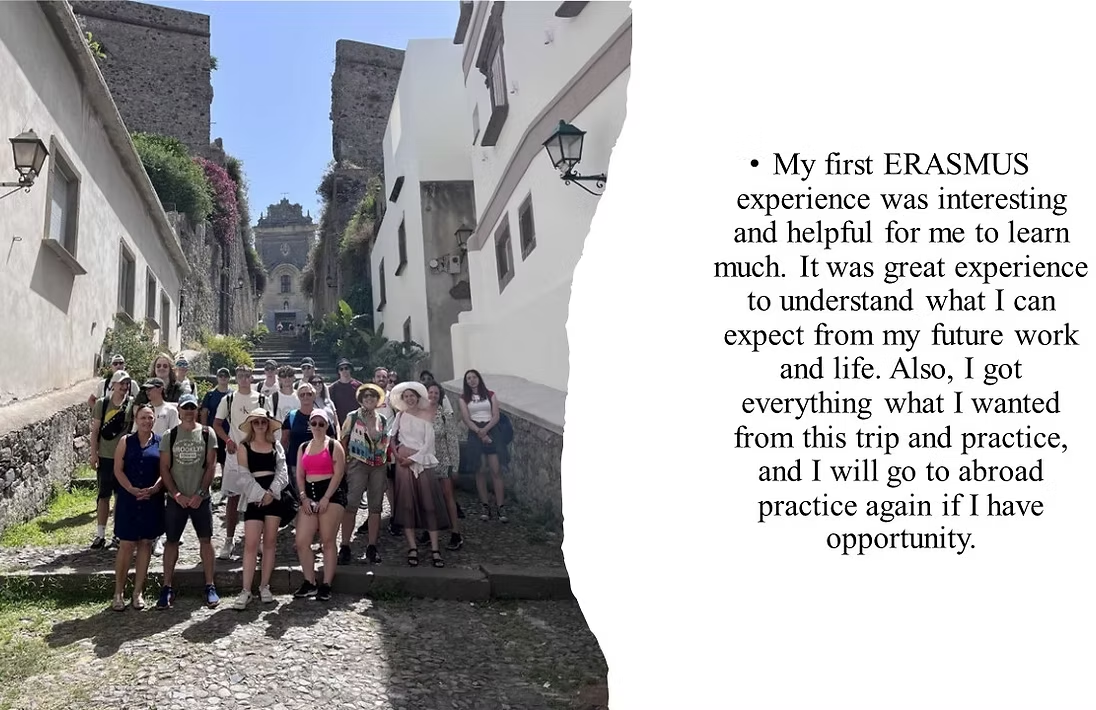
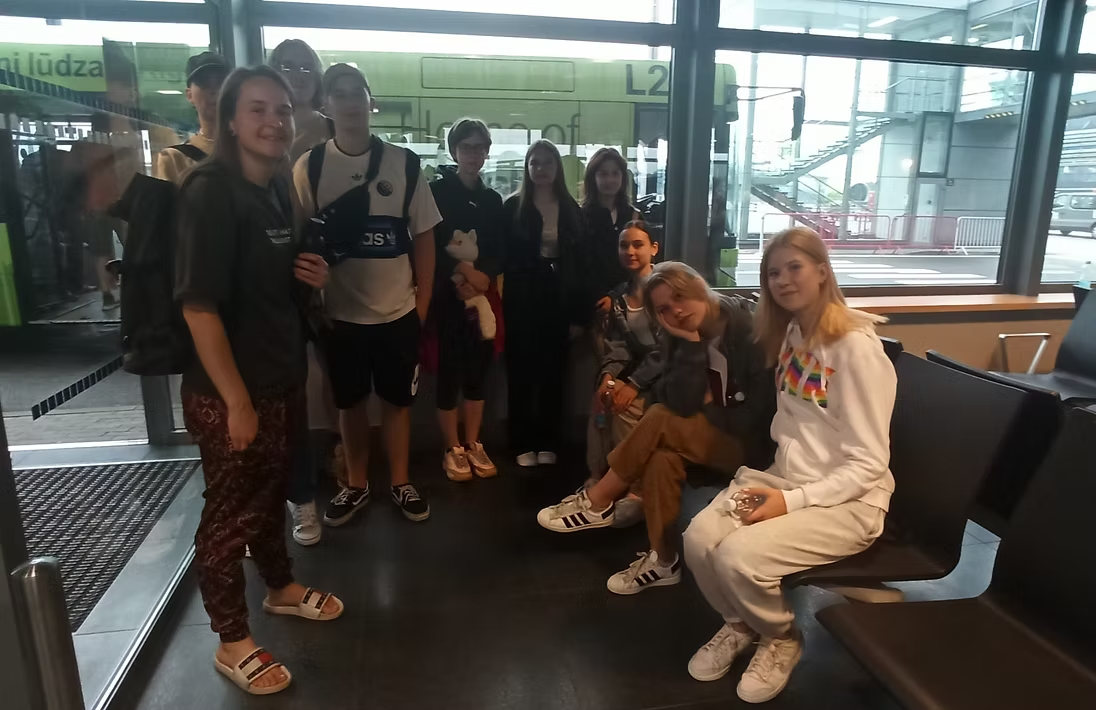
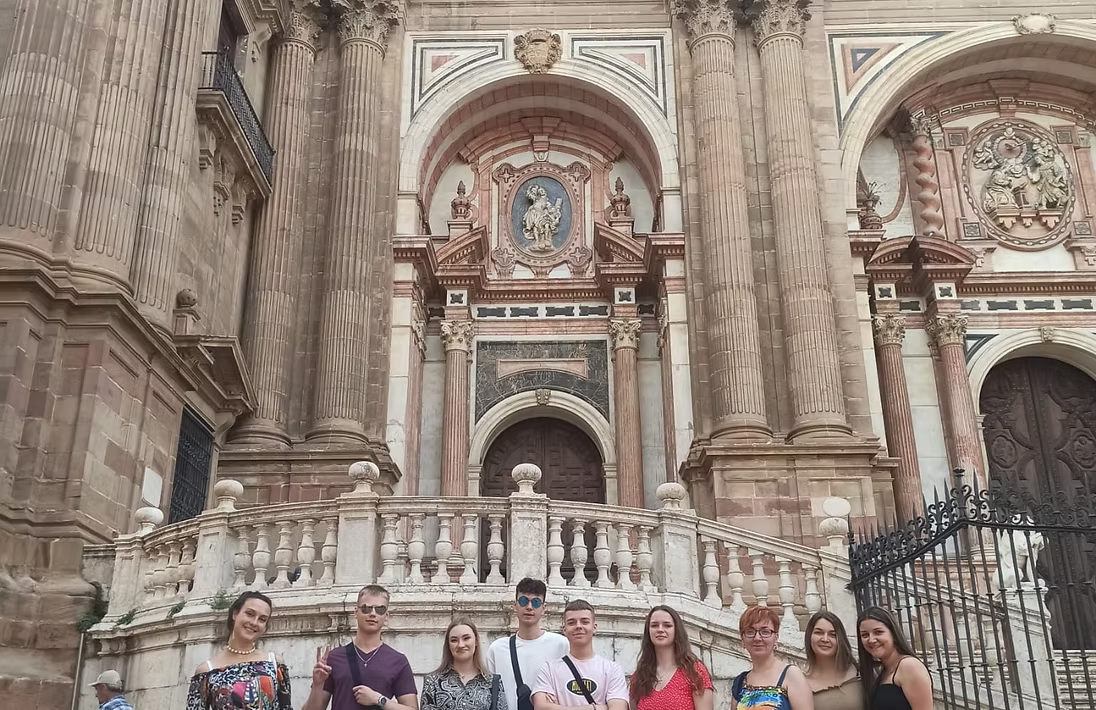
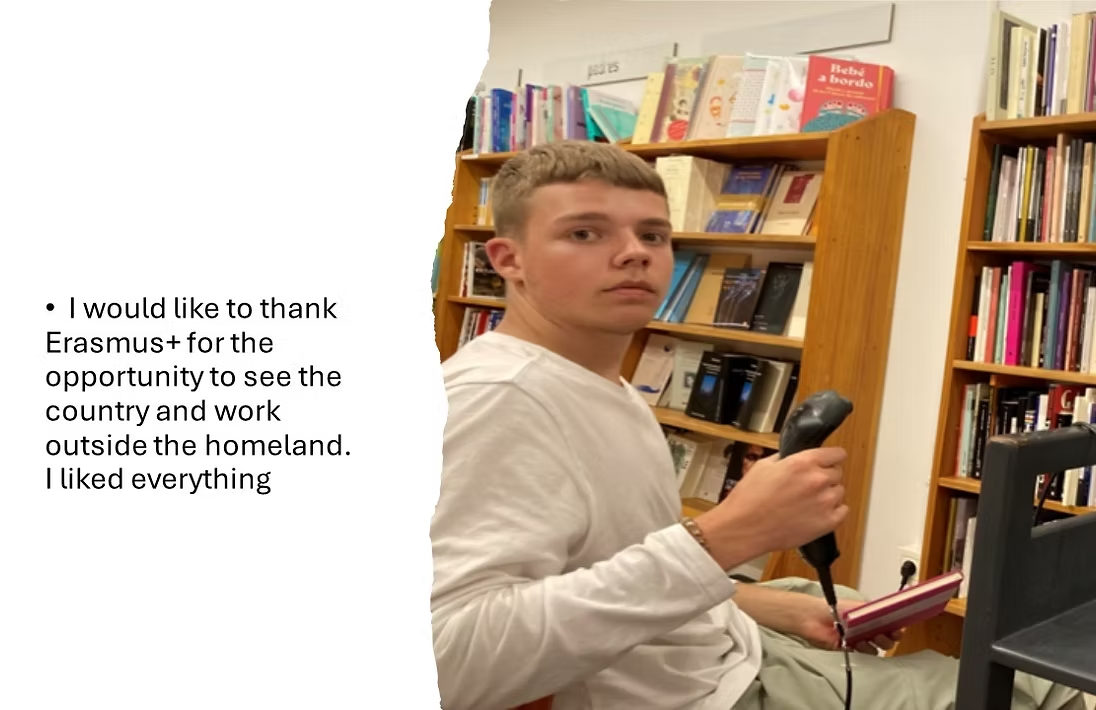
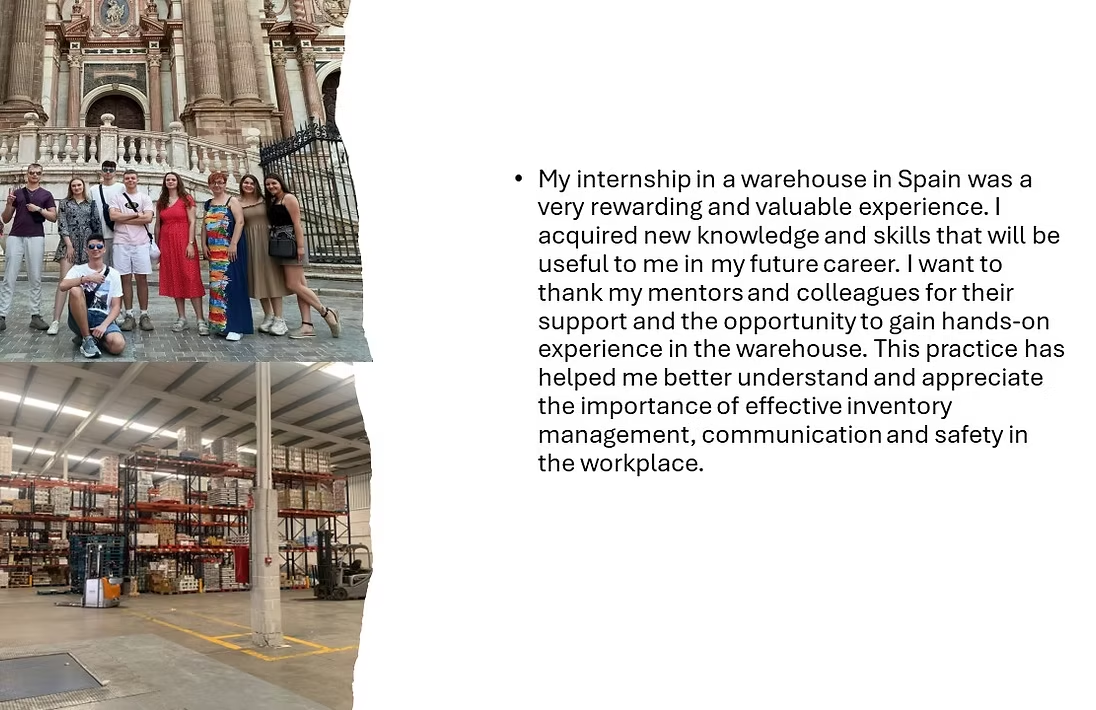
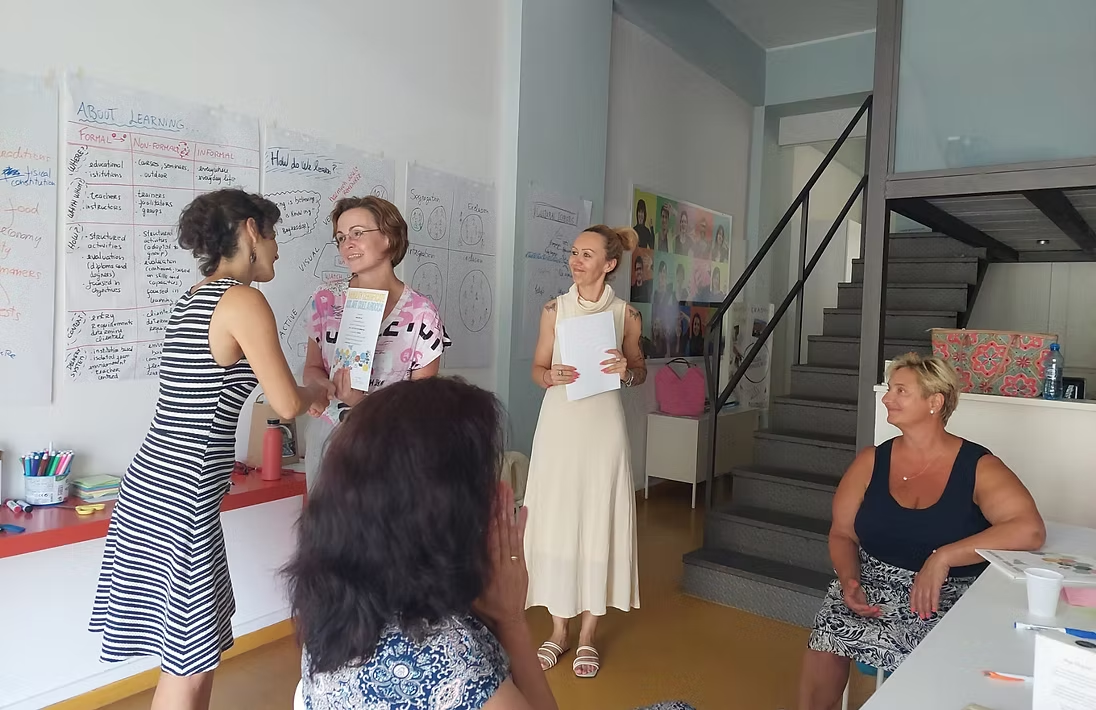
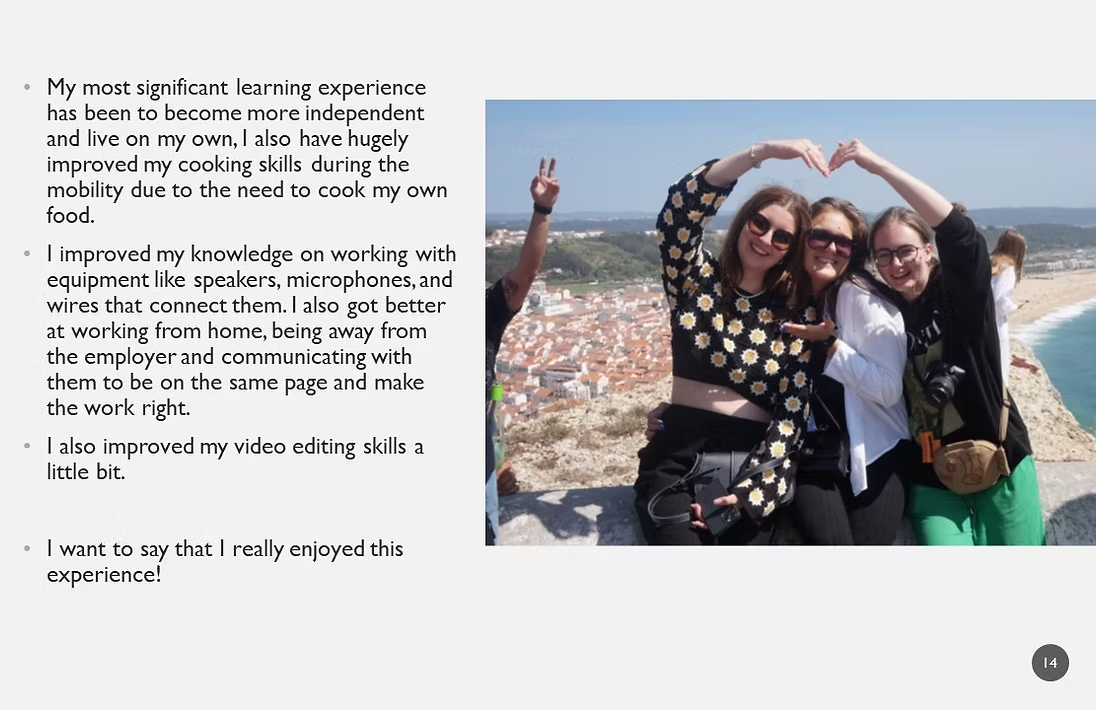

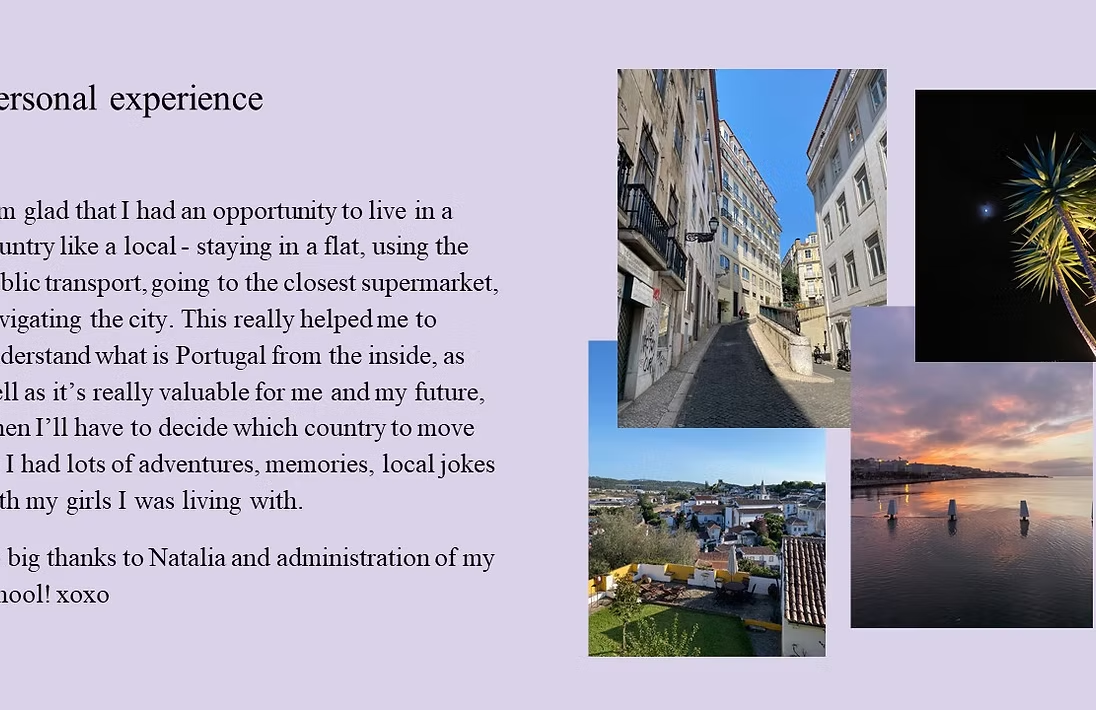
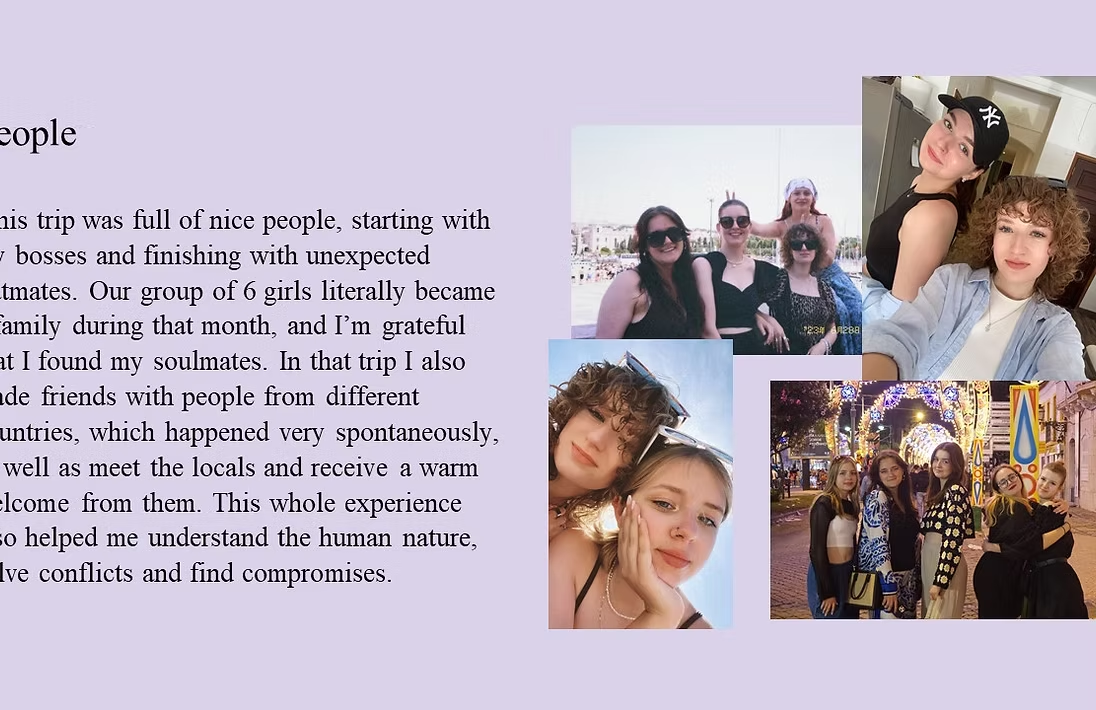
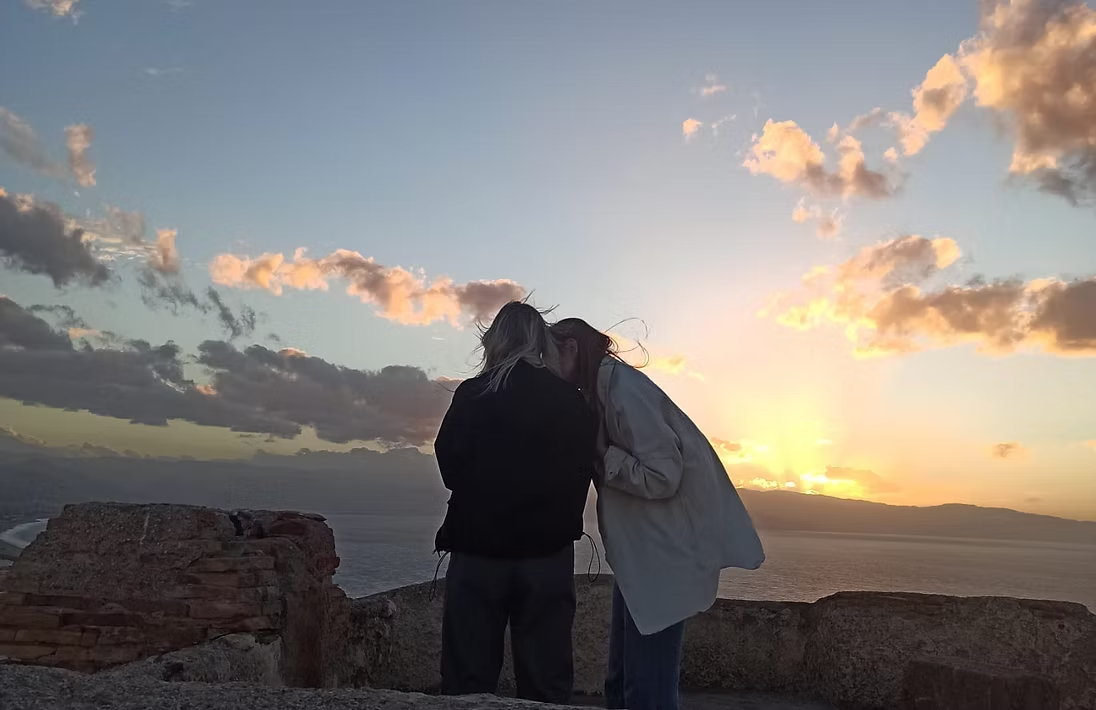


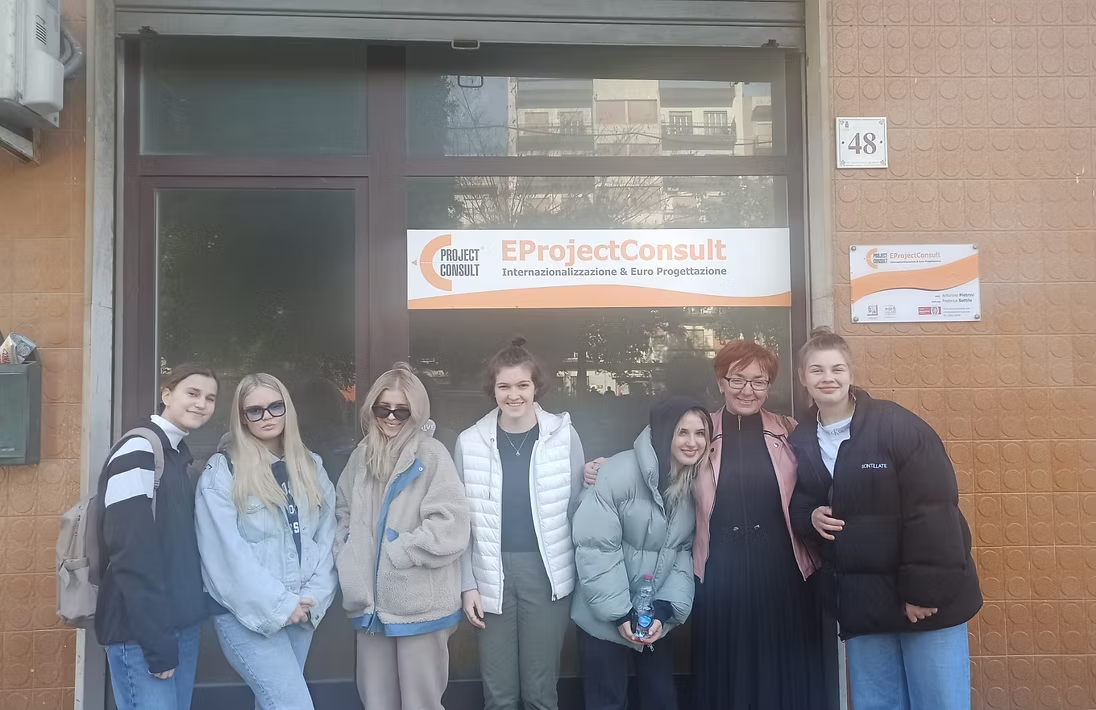
2020 “Go International with Victoria”
Vocational Secondary School "Victoria" developed the project
"Go International with Victoria" in line with the school's internationalisation strategy for 2019–2024, the aim of which is to provide high-quality, internationally recognised education in professions that are in demand on today's labour market.
Project start: 16 August 2020
The project has several aims to be achieved through its activities:
to develop and deepen participants' knowledge and practical skills in their chosen profession, improving their cultural understanding, self-confidence, foreign language skills and motivation to learn through work-based learning and traineeships at companies abroad;
to provide training abroad for staff and teachers through job shadowing at partner organisations' companies and educational institutions;
to advance the internationalisation of the school and improve the quality of its education.
Main activities:
student traineeships and work-based learning at companies abroad;
developing cooperation with existing and new international partners;
staff training abroad, and long-term traineeships for senior students.
The project comprises:
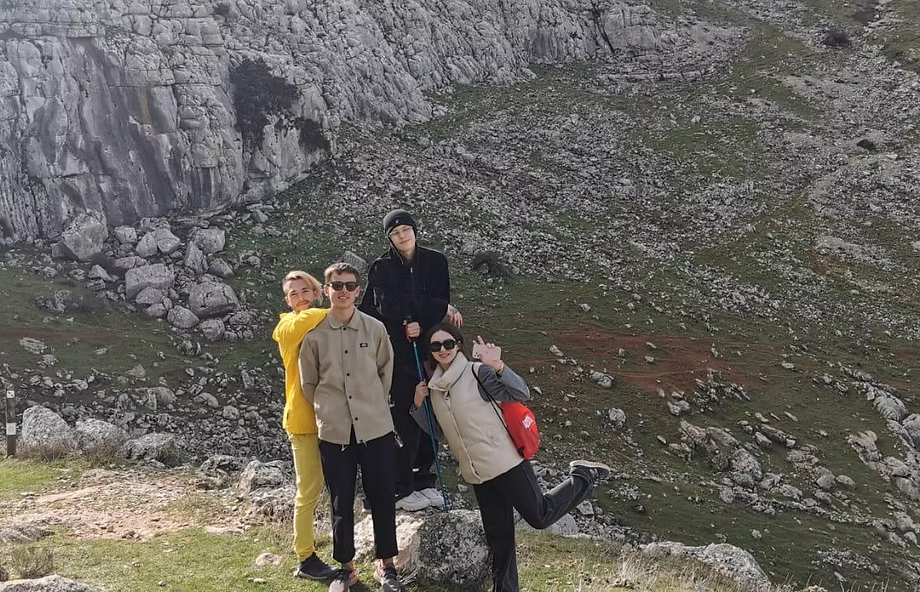
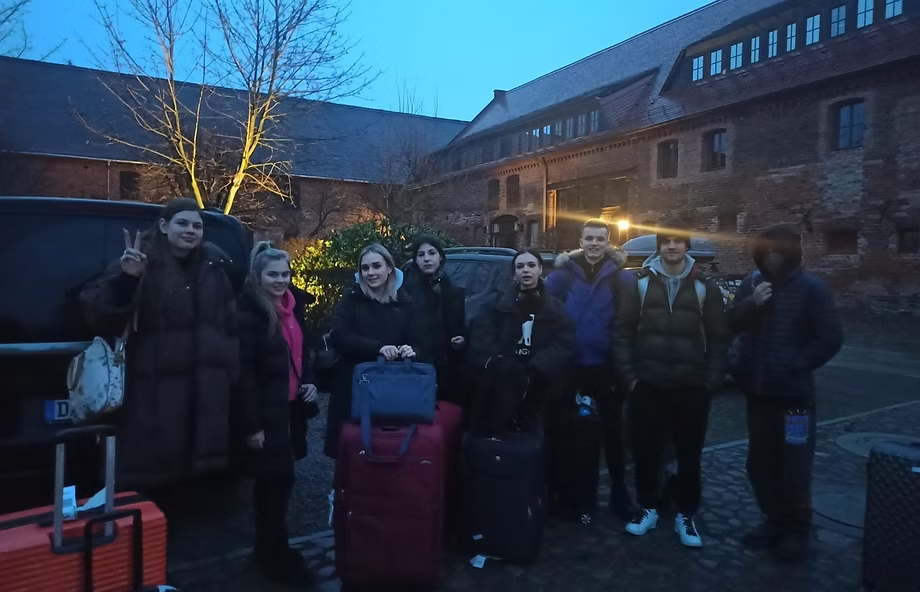
5 short-term mobilities (three weeks to one month)
1 long-term Erasmus+ PRO mobility for fourth-year students (four months)
staff training mobilities
a mobility planning visit
Partners:
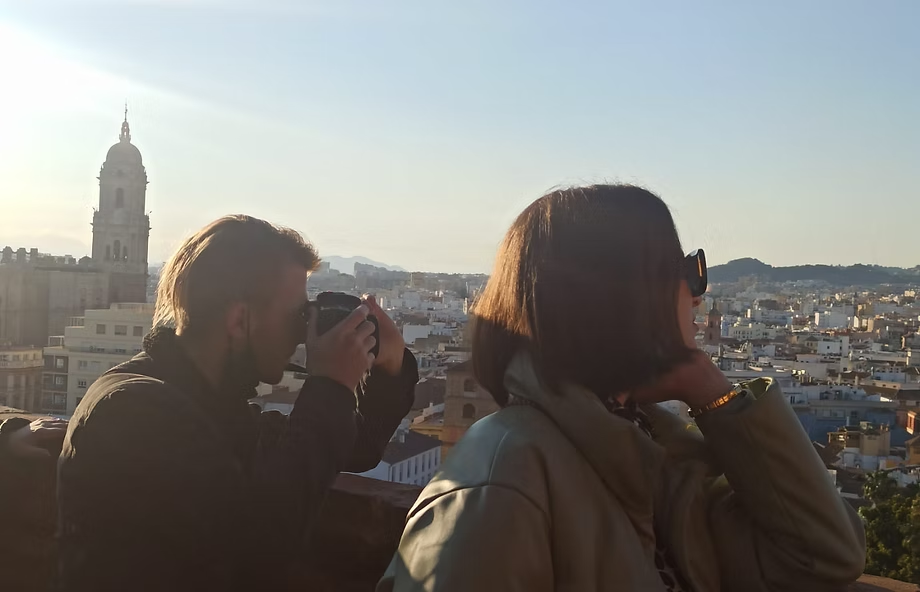
Associazione Artistica Culturale "A Rocca", Italy (Sicily)
Formación Europea Práctica, Spain (Tenerife)
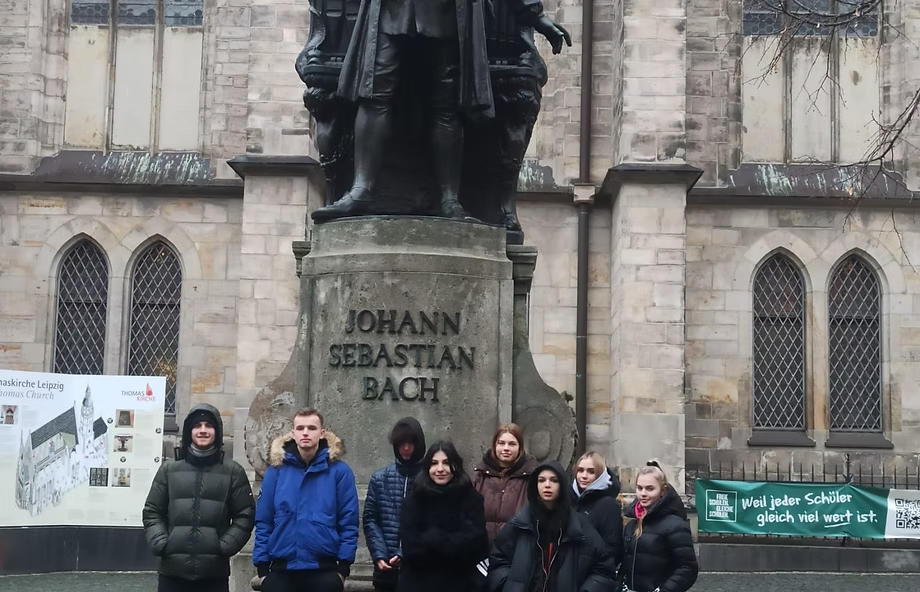
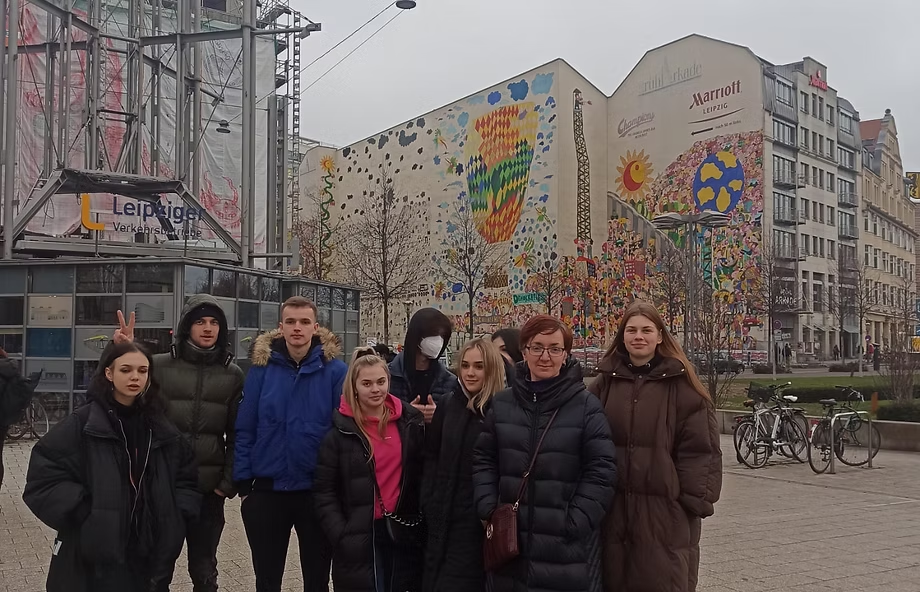
VITALIS Betreuungsgesellschaft für Modellprojekte mbH, Germany (Leipzig)
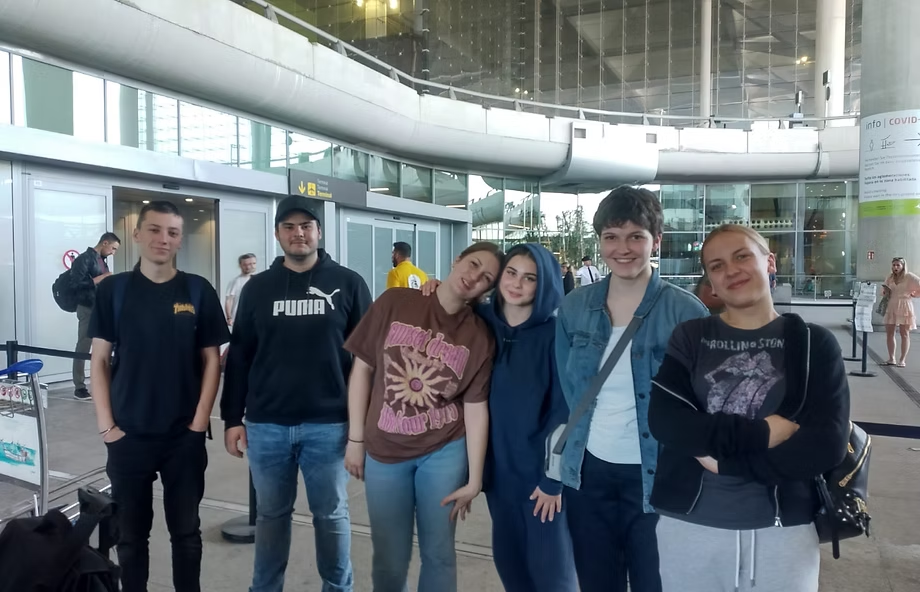
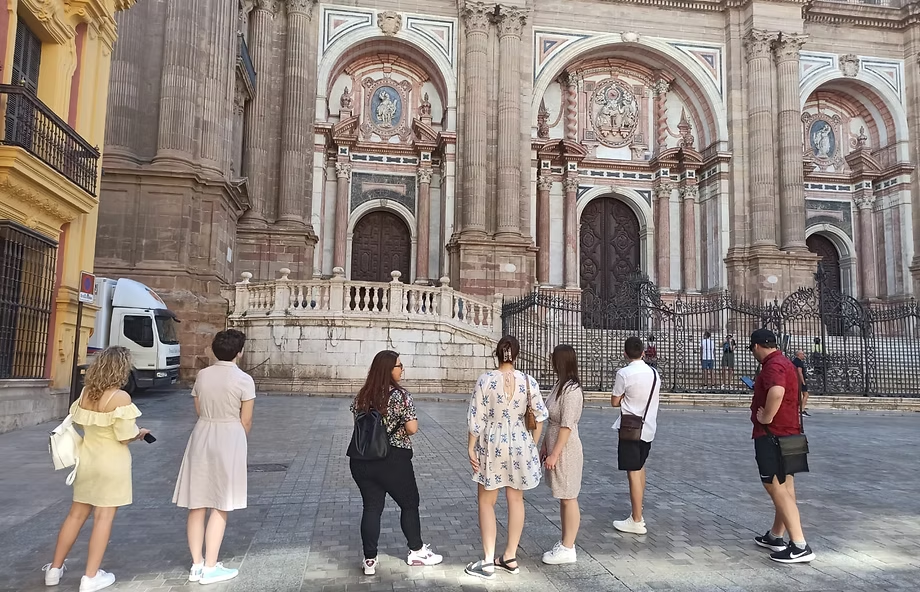
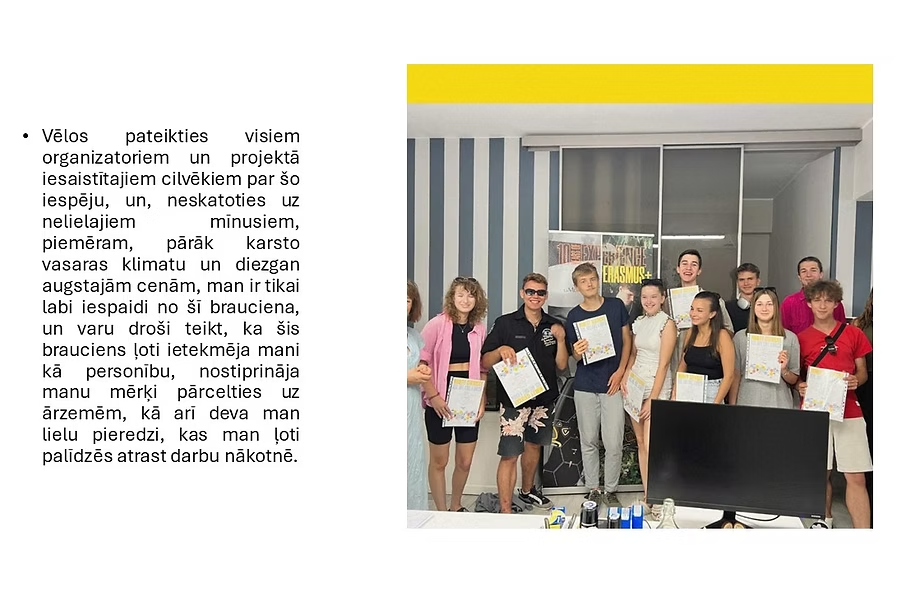
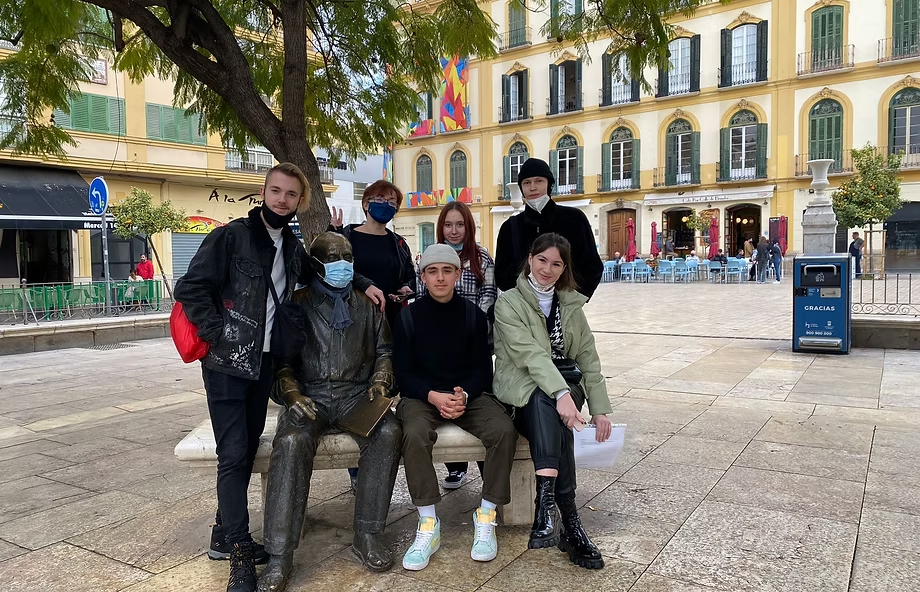
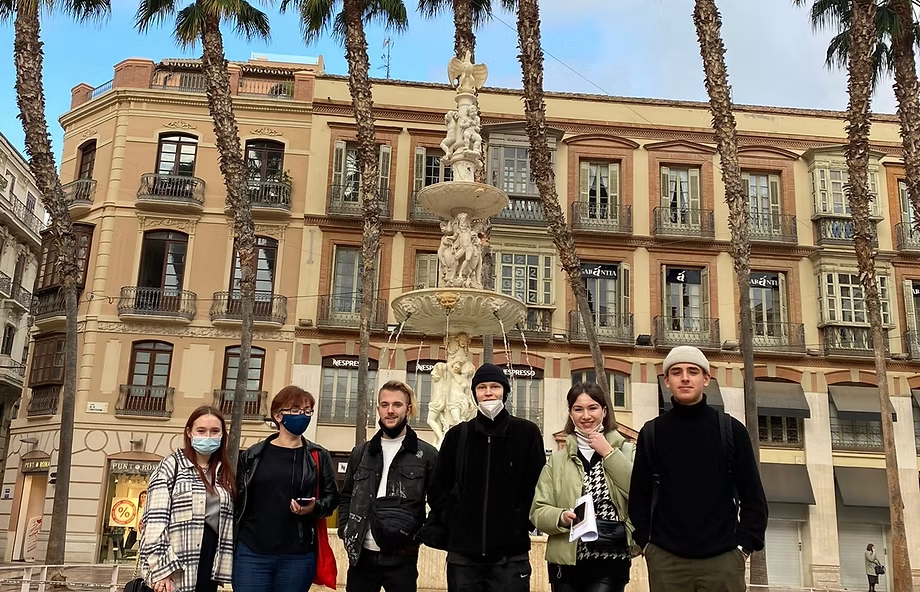
Tribeka Training Lab S.L.U., Spain (Malaga)
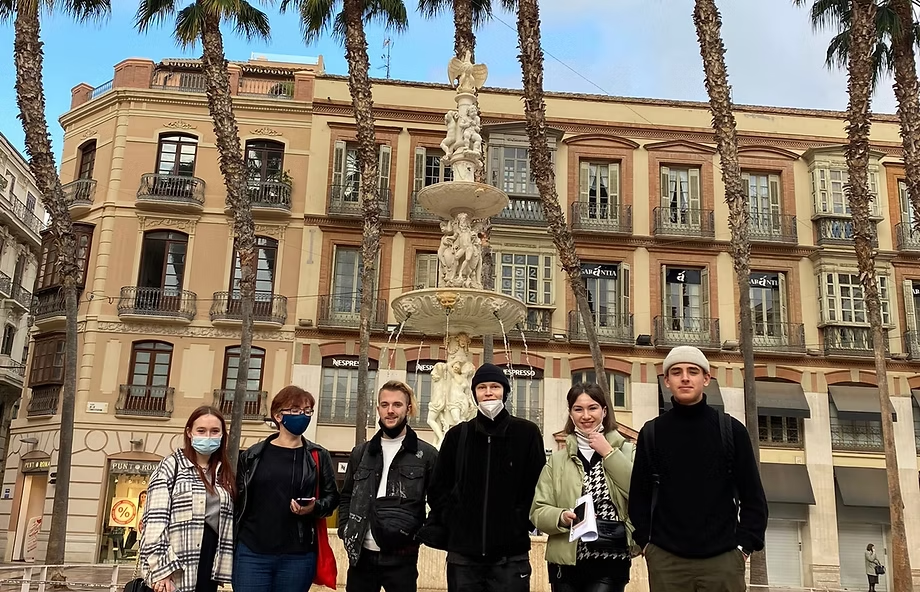
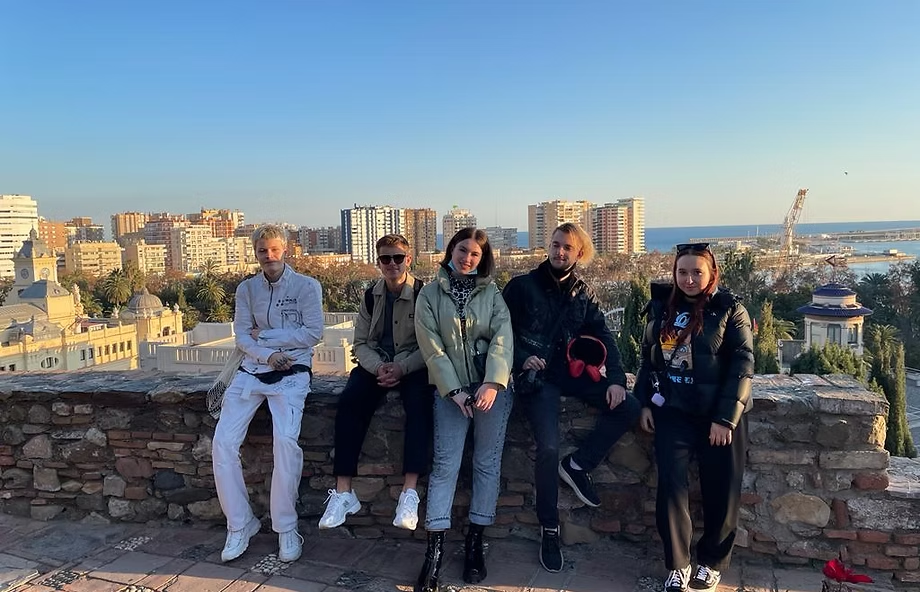








2019-1-LV01-KA102-060313
Vocational Secondary School "Victoria" has signed a funding agreement with the State Education Development Agency for the implementation of the European Union Erasmus+ programme Key Action 1 (KA1) project "Spied 'Patīk' Profesionālai pieredzei ES!" (Hit 'Like' for Professional Experience in the EU!).
Project title: "Spied “Patīk” Profesionālai pieredzei ES! (Hit 'Like' for Professional Experience in the EU!)”
Projekta No.: 2019-1-LV01-KA102-060313
Project duration: 1 June 2019 to 31 October 2020 (extended to 31 October 2021)
Project aim: The first aim of the project is to give young people the opportunity to complete traineeships at companies and at educational institutions abroad, building their professional skills, developing their intercultural competence and foreign language skills, increasing their motivation to learn, and allowing their learning outcomes to be benchmarked in an international context. The second aim is to enable the school's staff — primarily teachers of vocational subjects — to exchange experience in designing traineeships and to gain international experience and knowledge that can be applied at "Victoria", as well as to raise the level of international competence at the school, so that integrating this knowledge into the school's work also raises the standard of education students receive.
Participants: 34 students from all of the school's study programmes and 2 members of staff.
Project partners / host organisations:
FORMACIÓN EUROPEA, PRÁCTICA, MOVILIDAD (Spain),
Associazione Artistica Culturale "A Rocca" (Italy),
Aplicaproposta Lda (Portugal),
VITALIS Betreuungsgesellschaft für Modellprojekte mbH (Germany),
Tribeka Training Lab S.L.U. (Spain).





Inga Sandija Matisone
International Projects Manager
inga.matisone@skolavictoria.lv
+371 25618708